Khajeh Nazar Caravanserai

Today, we want to travel to the northwest of Iran to introduce you to one of the border attractions of this country. A building that is a strange combination of religion, trade, nationalism and architecture.
Its name is Khajeh Nazar Caravanserai, which is located in the city of Jolfa (East Azerbaijan province) and on the border of the Republic of Azerbaijan.
Now let's start our border journey.
The story of Khajeh Nazar Caravanserai:
During the Safavid era and the time of Shah Abbas I, due to the expansion of international relations, Iran had become one of the most important countries in the world in the economic field, and European business delegations were constantly visiting Iran. Shah Abbas took various measures to facilitate trade with Europeans, one of which was the construction of 999 caravanserais on all trade routes. These caravanserais were considered a place to ensure the safety of the caravans and their well-being. One of these caravanserais, which was located on the silk road leading to Osmani and then to Europe, is Khajeh Nazar Caravanserai.Khajeh Nazar, a wealthy Christian Armenian who was also trusted by the Safavid court, built this caravanserai at his own expense as an Armenian living in Iran and for the convenience of people and even followers of other religions. Today, this caravanserai has been turned into a ceramic and pottery museum.
Does this caravanserai have a special architectural feature?
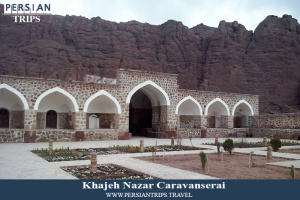
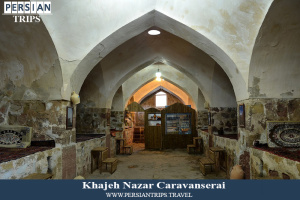
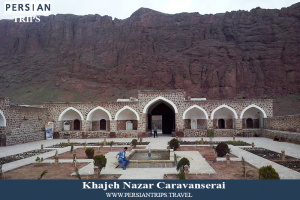
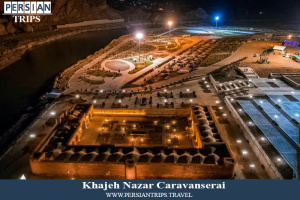
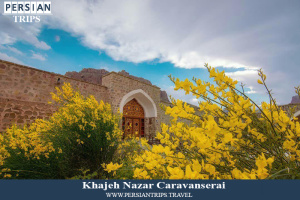
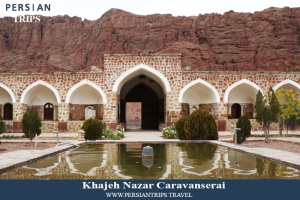
Yes sure! Unlike other caravanserais, this building is a large rectangle with stone walls (similar to Christian buildings in Europe) with a large courtyard. The materials used include brick and stone cut from the surrounding mountains, which are very strong and compatible with the surrounding nature. The visual difference between this caravanserai and desert examples is here. Also, the building is built on one floor and the rooms all have arched entrances.
Even if you travel all over Iran, still at the last border point, Khajeh Nazar Caravanserai is waiting for you!!!